全球海平面正以前所未有的速度上升,加剧了风暴潮、海岸侵蚀与洪涝灾害,威胁着数十亿沿海居民的家园,已成为气候变化最直接、最严峻的后果之一。理解海平面为何上升、如何变化,并准确预估其未来上升幅度,是科学界面临的一项紧迫挑战。厦门大学海洋生物地球化学全国重点实验室吕柯伟博士,正是这一领域的探索者。他的研究以海平面变化为核心,结合来自卫星观测、Argo浮标阵列等海量数据与先进的气候模式模拟,系统解析海平面在短期变动、长期趋势背后的物理“密码”,力图揭示主导全球与区域海平面变化的关键海洋-气候动力过程。
1. 精准约束全球变暖的“热膨胀”效应
海洋吸收了全球变暖产生的90%以上的额外热量。随着海洋持续升温,海水受热膨胀已成为全球平均海平面上升的最大单一贡献源。吕柯伟博士利用Argo全球浮标阵列获得的高精度观测记录,有效约束了气候模式对未来全球海洋增暖以及热膨胀贡献的预估,显著降低了其中的不确定性。他进一步聚焦南大洋这一核心热汇区,结合海洋通风理论过程与数值模拟,深刻揭示了该区域热量吸收、输运、及储存的动力机制。
2. 解析海平面变化空间格局的“动力引擎”
海平面上升幅度并非全球均匀,区域差异极大,这主要受海洋环流变化及其带来的热量、盐分、质量再分配所控制。吕柯伟博士的研究首次估算了全球不同海域海平面变化信号何时能明确超出其自然变动范围,并量化了气候模式平均态模拟偏差对不同海域海平面未来变化预估的影响。他受邀与来自多个国家的领域内专家合作,共同梳理当前全球气候模式对未来海平面预估的不确定性,并参与国际模式试验比较项目,推动对气候模式模拟不确定性的动力理解。其目前在研的国家自然科学基金面上项目聚焦海洋盐度的长期变化及其对区域动力海平面差异的贡献。
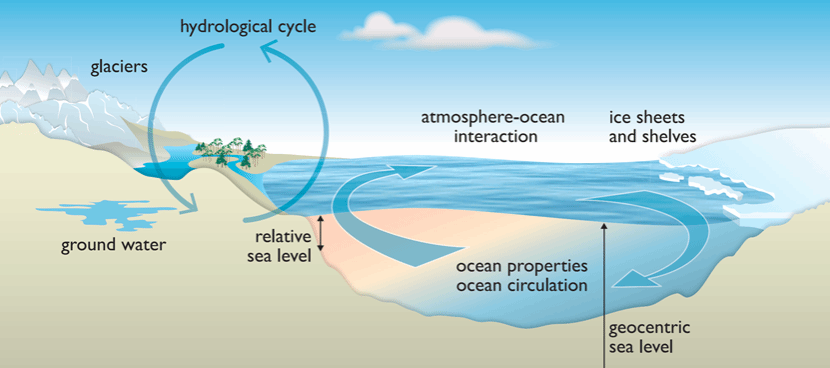
图1 影响全球和区域海平面的主要过程(引自IPCC第五次评估报告)
3. 捕捉海洋的“年代际脉搏”
尽管卫星高度计提供了三十余年全球海平面观测数据,但在年代际气候变动的显著影响下,其观测到的区域海平面变化趋势在多大程度上能够代表长期变化信号目前还存在较大争议。吕柯伟博士的研究揭示了太平洋海平面年代际变动的多尺度特征,发现了本世纪初南大洋的快速增温存在年代际减缓趋势,这与气候系统内部自然变率息息相关。他与合作者还基于重力卫星观测数据,明确建立了南极冰盖质量变化与主要气候模态在年代际时间尺度上的关联。目前,他担任世界气候研究计划(WCRP)灯塔计划“解释和预测地球系统变化”工作组成员,气候变率及可预测性(CLIVAR)国际计划太平洋区域委员会委员,并主持以年代际气候变化机理和预测为主题的国家重点研发计划青年科学家项目。
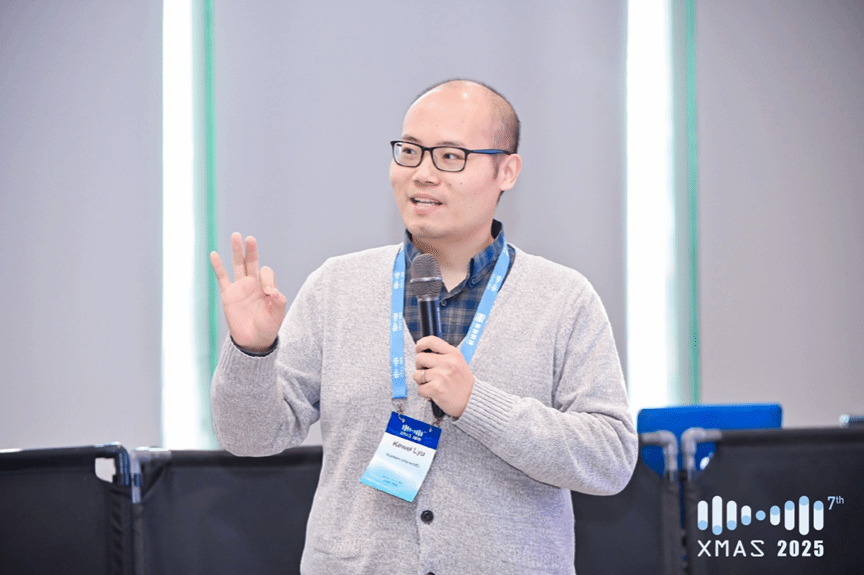
图2 吕柯伟博士主持XMAS2025海平面专
目前,吕柯伟博士的团队正在尝试将全球和区域尺度的海平面研究拓展至近岸区域,重点关注沿岸海平面变化及其与大尺度环流之间的关联,着重评估沿岸极端海平面事件发生频率和强度的变化,从而为沿海地区准确评估潜在风险、合理制定防护措施提供关键信息。
如有兴趣了解吕柯伟博士的更多情况,欢迎访问其个人主页 https://mel2.xmu.edu.cn/faculty/KeweiLyu/,或联系kewei.lyu@xmu.edu.cn。
人物名片:
吕柯伟博士于2015年12月获厦门大学物理海洋学博士学位,随后在美国加州大学尔湾分校(2016-2018)、澳大利亚联邦科学与工业研究组织(2018-2021)、塔斯马尼亚大学(2021-2022)从事博士后研究,2022年8月入职厦门大学海洋与地球学院、海洋生物地球化学全国重点实验室担任教授。吕柯伟博士的研究围绕海平面变化这一主题,结合观测资料与海洋/气候模式模拟,对海平面的短期变动规律、长期变化趋势、以及关键大尺度海洋气候动力过程开展了深入研究。
Dr. Kewei Lyu: Exploring the Physical Drivers and Future Projections of Sea-Level Change
Global sea levels are rising at an unprecedented rate, exacerbating storm surges, coastal erosion, and flooding. As one of the most direct and severe consequences of climate change, this phenomenon threatens the homes of billions of coastal residents. Understanding the drivers and patterns of sea-level change, and accurately projecting its future magnitude, remains a critical and urgent challenge for the scientific community. Dr. Kewei Lyu, a researcher at the State Key Laboratory of Marine Environmental Science (MEL) at Xiamen University, is at the forefront of this exploration. His research centers on sea-level change, integrating massive datasets from satellite observations and Argo float arrays with advanced climate model simulations. By doing so, he systematically deciphers the physical "code" behind short-term fluctuations and long-term trends, aiming to elucidate the key ocean-climate dynamical processes that govern both global and regional sea-level changes.
1. Precise Constraints on the "Thermal Expansion" Effect of Global Warming
The ocean has sequestered over 90% of the excess heat generated by global warming. As the ocean continues to warm, the resulting thermal expansion of seawater has become the largest single contributor to global mean sea-level rise. Utilizing high-precision observational records from the Argo global profiling float array, Kewei has effectively constrained climate model projections of future ocean warming and its thermosteric contribution, significantly reducing the uncertainties. Furthermore, by focusing on the Southern Ocean—a pivotal global heat sink—he has integrated ocean ventilation theory with numerical simulations to provide profound insights into the dynamical mechanisms governing heat uptake, transport, and storage within this critical region.
2. Deciphering the "Dynamical Engine" Behind Regional Sea-Level Patterns
Sea-level rise is not globally uniform; rather, it exhibits vast regional differences driven by changes in ocean circulation and the resulting redistribution of heat, salt, and mass. Kewei's research marks the first estimation of the "Time of Emergence"—the point at which sea-level change signals in various ocean basins clearly exceed the range of natural variability. He has also quantified how systematic biases in the mean state of climate models impact future projections of regional sea-level changes. Invited to collaborate with leading international experts, Dr. Lyu has worked to synthesize the uncertainties in current global climate model projections and has actively participated in international model intercomparison project to advance the dynamical understanding of model simulation uncertainties. His current National Natural Science Foundation of China (NSFC) project focuses on long-term changes in ocean salinity and their role in driving regional patterns of dynamic sea level.
3. Capturing the "Decadal Pulse" of the Ocean
While satellite altimetry has provided over three decades of global sea-level observations, the extent to which these regional trends represent long-term signals remains a subject of intense debate, largely due to the profound influence of decadal climate variability. Kewei's research has illuminated the multi-scale characteristics of decadal sea-level variability in the Pacific and identified a decadal slowdown in the rapid warming of the Southern Ocean observed earlier this century—a phenomenon closely linked to internal natural variability within the climate system. Furthermore, by leveraging satellite gravity data, he and his collaborators have established a definitive link between Antarctic ice sheet mass balance and major climate modes on decadal timescales.
Currently, Dr. Lyu serves as a member of the WCRP (World Climate Research Programme) Lighthouse Activity on "Explaining and Predicting Earth System Change" and is a member of the CLIVAR (Climate and Ocean: Variability, Predictability and Change) Pacific Region Panel. He is also the Principal Investigator (PI) of a National Key R&D Program for Young Scientists, dedicated to advancing the mechanistic understanding and predictive skill of decadal climate variability.
Building upon his extensive work on global and regional sea-level change, Kewei is now extending his research to coastal regions. By exploring the intricate linkages between coastal sea-level change and large-scale ocean circulation, his team assesses changes in the frequency and intensity of extreme sea-level events (ESLs). This research initiative is designed to provide essential scientific insights for coastal communities, enabling more accurate risk assessments and the development of robust, science-based adaptation and mitigation strategies.
For more information, please visit Dr. Lyu’s website (https://mel2.xmu.edu.cn/faculty/KeweiLyu/) or contact him at kewei.lyu@xmu.edu.cn.
Biography:
Dr. Kewei Lyu received his PhD in Physical Oceanography from Xiamen University (XMU) in December 2015, then worked as a postdoctoral researcher at the University of California Irvine (2016-2018), the Australian Commonwealth Scientific and Industrial Research Organisation (CSIRO; 2018-2021), and the University of Tasmania (2021-2022). In August 2022, he joined XMU as a Professor. His research has been focusing on sea-level change, specifically combining observational records and ocean/climate model simulations to understand its short-term variability, long-term tendency, and related large-scale ocean/climate dynamical processes.