Abstract
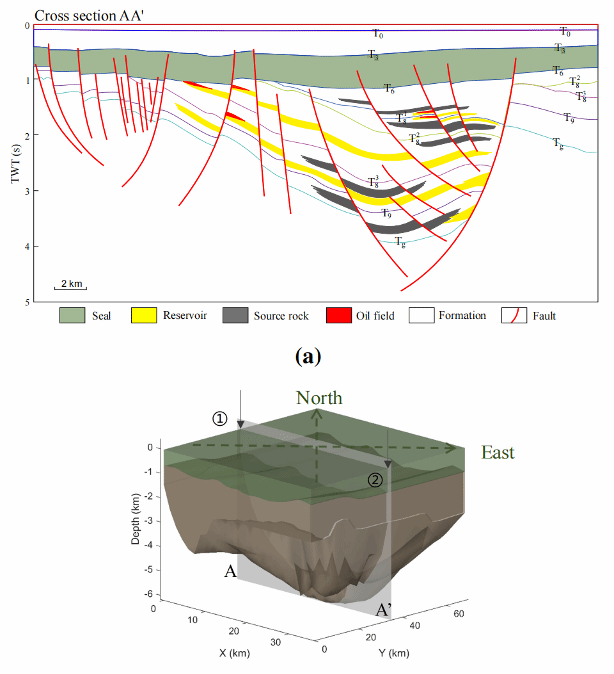
Geological storage of carbon dioxide (CO2) is a viable option for achieving large-scale and cost-effective reduction in global CO2 emissions. The Taixi Basin, spanning the Taiwan Strait, is a potential storage field for reducing CO2 emissions in the Fujian and Taiwan regions. It hosts multiple effective reservoir-seal combinations, with abundant sandstone formations. These combinations divide the Taixi Basin into five dominant sags, namely the Taizhong Sag, Xinzhu Sag, Jiulongjiang Sag, Jinjiang Sag, and Chongwu Sag. However, the resource assessment of CO2 storage in the Taixi Basin is typically conducted at the basin-scale, which makes it difficult to determine the resources of the target areas with optimal burial depths and superior reservoir conditions. This study estimates the prospective CO2 storage resources for each sag of the Taixi Basin using DOE volumetric methods, both without and with considering the pressure limitations. This approach allows for a more in-depth and accurate characterization of regional storage resources. The results show that the theoretical storage resources of the Taixi Basin range between 16.3 Gt and 62.2 Gt, and the effective resources range between 5.03 Gt and 12.3 Gt. This not only provides a clear range of theoretical and effective storage resources but also serves as a guide for implementing real-world CO2 storage projects.
J. Li*, Y. Hou, F. Yu*, D. Zhou, H. Dong, and X. Zhang (2026). Assessment of Prospective CO2 Geological Storage Resources in the Taiwan Strait. International Journal of Greenhouse Gas Control, 150, 104578.
https://doi.org/10.1016/j.ijggc.2026.104578